
News & Notes Oct 19
Redistricting Wars, Etc Etc

Happy Sunday, and welcome back to The American Times. Earlier this week, I wrote about Huey Long, the Democratic Party, and the value of having something to say in American politics today. If you haven’t read it, you can do that here…Now let’s get onto the news of the week.
While the federal government shutdown continues, and a brokered peace deal enters its first days in the Middle East while war rages on in Ukraine, one of the biggest stories of the week came out of the Supreme Court. It’s about redistricting and Section II of the Voting Rights Act of 1965. It’s the kind of thing I will probably do a historical deep dive on in future weeks for my standard weekly post, but something I wanted to bring up now.
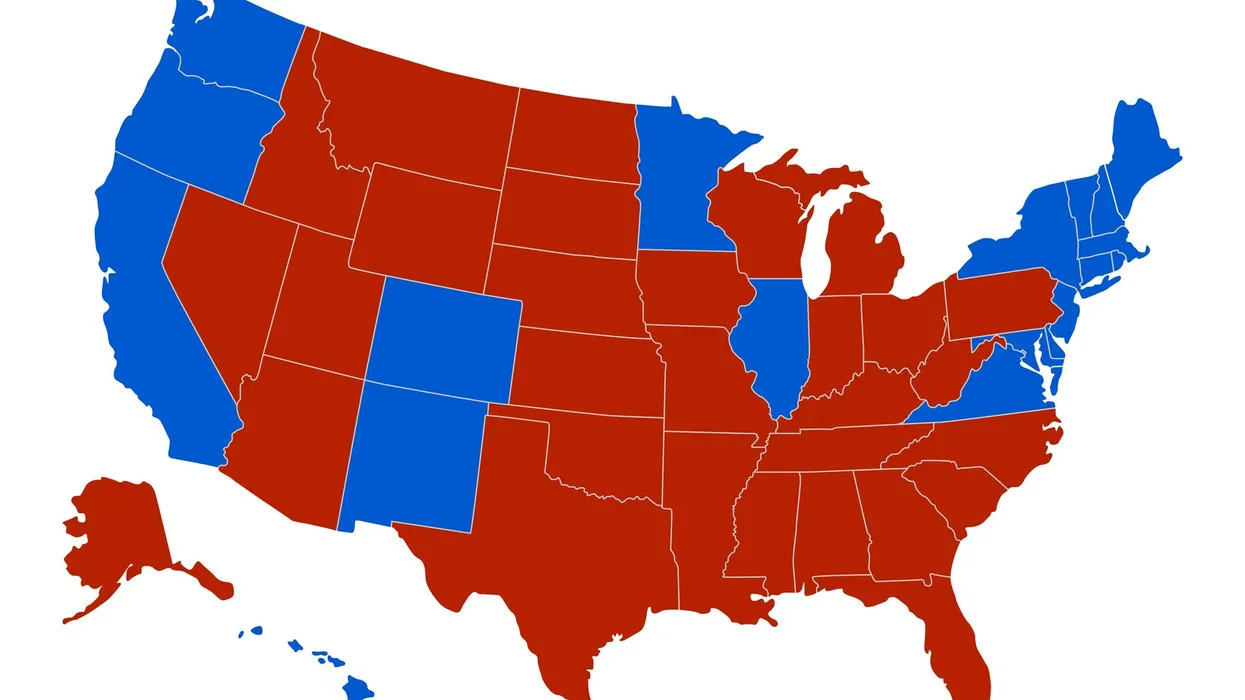
While the redistricting story this year has focused on Republican efforts in Texas, and Democratic countermeasures led by Gavin Newsom in California, the case before the Supreme Court could have a much wider impact in the years to come. It’s a case called Louisiana v. Callais, which the Court heard on Wednesday. Section II was, and is, a key provision of the Voting Rights Act of 1965, which was the last major legislative gain of the so-called golden era of the Civil Rights Movement. As the law states, Section II “prohibits voting practices or procedures that discriminate on the basis of race,” however the law has been used to create Black-majority congressional districts that have resulted in about a dozen Democratic-held seats, across the South. However, the Court seemed to indicate that it wants to phase out Section II, believing that the law’s race-based provisions are no longer necessary. As Justice Brett Kavanaugh said during oral arguments, “This court’s cases, in a variety of contexts, have said that race-based remedies are permissible for a period of time — sometimes for a long period of time, decades in some cases — but that they should not be indefinite, and should have an end point.”
The overall impact of gutting Section II—which comes over a decade after the Court already gutted the VRA in 2013 in Shelby County v. Holder—could be massive. As Nate Cohn illustrates, if the Court overrules Section II and other Southern states like Texas redistrict to favor Republicans, Democrats would have to win the midterm popular vote by 5 or 6 points to win the House.
That might not happen in 2026, just because of when the Court usually gives its opinions, which is in June or July. It stands to reason that states won’t be able to fully redistrict in time, but that is all conjecture.
This doesn’t mean that the House majority will be permanently Republican—although that’s a possibility. Remember, the House went Democratic in every election from 1954 to 1994. And parties have won 5-point margin victories before. As the Times points out, “In recent decades, five-point victories in the House popular vote have generally happened during ‘wave’ elections, like in 1994, 2006, 2010 and 2018, when one party ends up winning a large majority.”
In the immortal words of Joe Biden, this is a big F’ing deal.
Other News:
“The Coming AI Backlash,” from Foreign Affairs. This is a great breakdown of something I’ve been talking about for a few weeks now. As the writers describe, AI is going to supercharge populism across the planet. It is already upending the economy, as we know, but it will soon become perhaps the defining force in politics too. More than anything—if they capture the right message—this could be a major, major opportunity for Democrats to change the tide and label Republicans as the party of Artificial Intelligence and the lackeys of Silicon Valley. Let’s see what happens—either way, this issue will only grow larger.
“Everything Is Television,” by Derek Thompson. As Thompson writes, “Social media has evolved from text to photo to video to streams of text, photo, and video, and finally, it seems to have reached a kind of settled end state, in which TikTok and Meta are trying to become the same thing: a screen showing hours and hours of video made by people we don’t know. Social media has turned into television.” He’s right.
Here is a great piece of advice for all ages featured in The Wall Street Journal: stop saying maybe. Which means, really, when you want to say no, just say no. (Calling Nancy Reagan!) It is much more disrespectful to leave someone hanging, to say, yeah, I could, maybe, sure, let me think about it. You know. A maybe is worse than a direct no, so save them the placemat at the table or the chair at the poker game.
Here is a really good, historical deep-dive on deportation in the United States, by Jazmine Ulloa in The New York Times.
Here is a piece from Pro Publica about “the legions of masked immigration officers operating in near-total anonymity on the orders of the president as the crossing of a line that had long set the United States apart from the world’s most repressive regimes. ICE, in their view, has become an unfettered and unaccountable national police force. The transformation, the officials say, unfolded rapidly and in plain sight. Trump’s DHS appointees swiftly dismantled civil rights guardrails, encouraged agents to wear masks, threatened groups and state governments that stood in their way, and then made so many arrests that the influx overwhelmed lawyers trying to defend immigrants taken out of state or out of the country.” A must read.
I’m also going to share “In The Time of All The Kings’ Men,” by Robert Penn Warren, from May 1981. It’s a long piece from Warren that ran in The New York Times for the 35th anniversary of All The Kings’ Men, one of my favorite books of all time and one that I would highly recommend reading, or even rereading.
Sports:
The World Series is shaping up. Tonight, the Seattle Mariners will have the chance to punch their ticket to the dance when they play the Blue Jays in Toronto in Game 6 of the ALCS. Seattle has to win one more game this series, while the Jays have to win the final two. I think the Mariners get it done. In either case, either Seattle or Toronto will face the Los Angeles Dodgers starting on Friday night. The Dodgers swept the Brewers this weekend, in the most incredible fashion, as Shohei Ohtani hit three home runs and struck out 10 in 6 innings on the mound. Without doubt—and without argument—he is not just the greatest baseball player right now. He is the greatest baseball player ever. Just enjoy it.
I’ll have a full breakdown of the series next Friday morning.
On Football: On the college side, I was right about Texas taking down Oklahoma last week. Yesterday, the headlines came out the SEC again. Spoiler alert: Alabama and Georgia are both still king. In the NFL, I slipped up last week and told you that the Lions would beat the Chiefs. I was wrong—but so it goes. The game of the week may well have already been on Thursday night, when 40-year-old Joe Flacco outdueled 41-year-old Aaron Rodgers. Still, this afternoon’s matchup between the Washington Commanders and Dallas Cowboys should also provide fireworks. I like the Cowboys to win in a barn burner. On Monday Night, the Tampa Bay Bucs vs the Lions is another great game between two teams likely headed to the playoffs. But the Bucs are banged up. Take Lions -5.5.
Until next week.