
The Broken Promise
The End of The Voting Rights Act

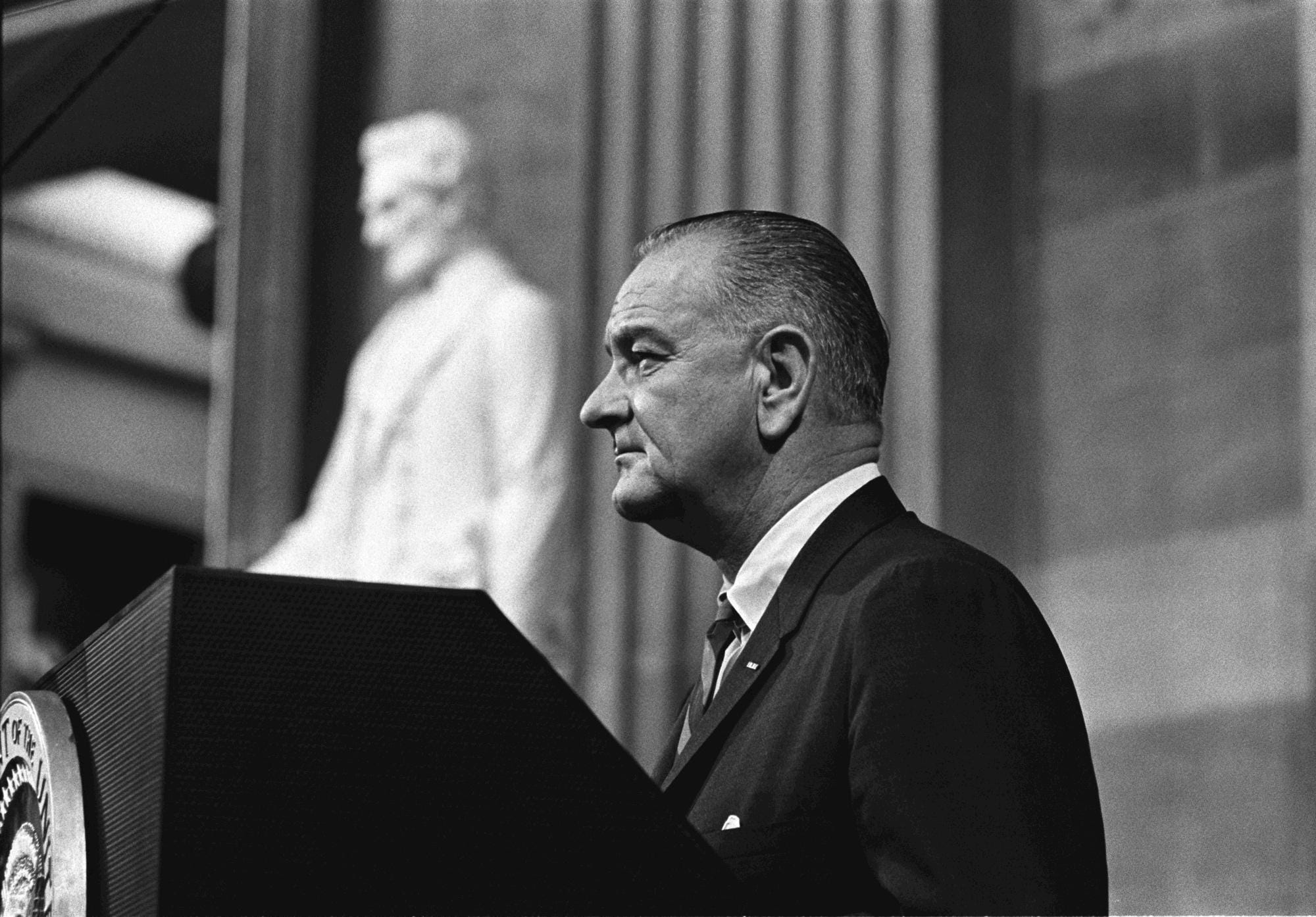
Last week, in its 6-3 Louisiana v. Callais decision, the Supreme Court dealt a death blow to the Voting Rights Act of 1965. When President Lyndon B. Johnson signed the Voting Rights Act into law on August 6, 1965, in the shadow of a statue of Abraham Lincoln inside the Capitol Rotunda, he remarked that following the Confederate surrender at Appomattox in 1865, “for almost a century the promise of that day was not fulfilled.” “Today,” however he said, “is a towering and certain mark that, in this generation, that promise will be kept.” Now, a generation later, that promise has been broken, perhaps forever.
The Voting Rights Act of 1965 was the crowning achievement of the Civil Rights movement. While Brown v. Board (1954) had ruled that racial segregation was illegal, it took a decade of violence and peaceful protest for the Civil Rights Act of 1964 to finally end Jim Crow’s reign. Yet even with its passage Black Americans living in the South still had to deal with poll taxes, literacy tests, and threats of violence to vote in elections. That meant that a century after the Civil War and nearly 200 years after the American Revolution, the United States was not yet a truly full democracy. As Johnson said that hot August day in 1965, “This act flows from a clear and simple wrong. Its only purpose is to right that wrong. Millions of Americans are denied the right to vote because of their color. This law will ensure them the right to vote. The wrong is one which no American, in his heart, can justify. The right is one which no American, true to our principles, can deny.”
Following the Civil War, in the period known as Reconstruction that began with the Emancipation Proclamation in 1863 and ended with the corrupt election of 1876 (a story which I detailed here), the United States had briefly become a fuller democracy. Following the war, the 13th Amendment (1865) to the Constitution had abolished slavery, the 14th Amendment (1868) had ensured that all people born in the United States were citizens with full rights, and the 15thAmendment (1870) had stated simply, “The right of citizens of the United States to vote shall not be denied or abridged by the United States or by any State on account of race, color, or previous condition of servitude.”
The 15th Amendment made it possible for a person like Joseph Rainey to be elected to the House of Representatives. On December 12, 1870, Rainey—who had been born into slavery— ascended the steps of the same U.S. Capitol building where President Johnson signed the Voting Rights Act into law nearly a century later, becoming the first Black representative in American history. In total, during the postbellum period sixteen Black men served in Congress. Still, the forces against freedom and American progress never stopped working. On Christmas Day 1868, President Andrew Johnson—the Southern Democrat who succeeded Lincoln—issued a blanket pardon for all former Confederates. The trial of Jefferson Davis, the Confederacy’s president, never took place.
Because of Reconstruction’s end and the rise of Jim Crow, Black representation essentially ended in Congress for decades. In South Carolina, for example, following Rainey’s departure in 1879, the last Black Congressman to represent South Carolina during the period was George W. Murray, who served until 1895 when he was forced out of office. After Murray, South Carolina’s next Black representative would not be elected for nearly a century, until 1992—when Jim Clyburn was elected. In the entire South, following the last Black representative’s exit in 1901, there would not be another single Black member of Congress elected from the former Confederacy until 1972, when Barbara Jordan of Texas and Andrew Young of Georgia were elected to the House of Representatives. Their election—and that of many others who have served through the present day—happened in large part because of the Voting Rights Act of 1965, which codified the 15th Amendment.
When Johnson signed the Voting Rights Act in 1965, he said, “There were those who said this is an old injustice, and there is no need to hurry. But 95 years have passed since the 15th Amendment gave all Negroes the right to vote. And the time for waiting is gone.” Yet, last week, the Supreme Court made it clear that the waiting will resume again. With its decision to essentially abolish Section II of the Voting Rights Act, Southern states can now legally get rid of majority Black districts through gerrymandering. Essentially—given the inevitable redistricting already underway—the second period of Black Southern representation in the House has ended. The first began in 1870 with Rainey’s election and ended in 1901 with the rise of Jim Crow and segregation. The second began with the Voting Rights Act of 1965 and ended with Louisiana v. Callais last week.
When this period of history is reviewed, the Roberts Court will be rightly understood as perhaps the most radical in American history. It has effectively ended Affirmative Action (Students for Fair Admissions v. Harvard, 2023), ruled that presidents have almost unlimited immunity (Trump v. United States, 2024), overturned Roe v. Wade (1973) in its Dobbs v. Jackson (2022) decision, struck down Section IV of the Voting Rights Act of 1965 (Shelby County v. Holder, 2010), and perhaps most consequentially, ruled that corporate funding of elections cannot be limited (Citizens United v. FEC, 2010), essentially ensuring that American elections can be bought.
With the ruling in Louisiana v. Callais last week, the Roberts Court has effectively neutered the Voting Rights Act of 1965 permanently. Consider this: it will now take a Democratic president who is willing to take on the task, alongside the support of a Democratic House and Senate, to reenact and even expand the cause for which marchers crossed the Edmund Pettus Bridge in March of 1965, a story which I detailed in February. And even if such a law is passed, it will have to get past a 6-3 Supreme Court that will remain actively ideologically repressive for years if not decades to come.
As I mentioned Monday on Morning Joe, this should not be a major surprise: John Roberts began his career as an aide in Reagan’s Department of Justice tasked with undermining the Voting Rights Act. This is quite literally a decades long project for Roberts and Republicans.
Make no mistake: this is not about Constitutional originalism; it is about limiting freedoms for a certain class of Americans and a total reorientation of the American government itself. That is the goal of the Roberts Court, and more broadly, the Trump Administration. Together, they are holding two branches of the federal government hostage, while effectively neutering the power of the third. Essentially, the Roberts Court has provided the legal rationale for America’s slide toward kleptocratic autocracy while falsely claiming its vision is based in the Founders’ intent.
When President Lyndon Johnson signed the Voting Rights Act into law in the same building that slaves had built and where former slaves went on to serve in Congress, he said “The central fact of American civilization—one so hard for others to understand—is that freedom and justice and the dignity of man are not just words to us. We believe in them.”
The Roberts Court and the Trump Administration, however, clearly do not.
This South Carolinian who lives in a city with a park named after Joseph Rainey is broken-hearted for her state and country. The resurrection of racism as acceptable, by those supposedly elected to serve the people, has driven a deep wedge between families, friends and neighbors.
Sad, so Sad.
Is it possible, though, that, as a result of those two brief periods of sanity, a significant portion of non-Black Americans (excluding the Roberts’ Court and it’s associated supporters) have made progress in their thinking as a result of the demonstrated talent of Black Americans in all walks of life, including politics?
If so, perhaps it will not be as hard to overcome this tragedy as it was the last two times.